The Future of AI-Powered Visual Content for Businesses
Visual content has become a critical component of modern digital marketing. Artificial Intelligence is now revolutionizing how businesses create images, graphics, and marketing materials. This article explores the future of AI-powered visual content and how businesses can leverage these technologies to enhance their digital presence.
Introduction
Visual content has become one of the most influential elements of modern digital communication.
Across social media platforms, websites, and digital marketing campaigns, images and graphics play a crucial role in capturing attention and conveying messages effectively.
Research consistently shows that visual content significantly increases engagement rates compared to text-only content. Posts that include images, infographics, or visual storytelling elements tend to attract more views, clicks, and interactions.
However, producing high-quality visual content consistently can be challenging for many businesses.
Designing graphics, creating marketing visuals, and maintaining a consistent visual identity requires time, creative expertise, and access to design tools.
In recent years, Artificial Intelligence has begun transforming this process.
AI-powered technologies are enabling businesses to generate visual content faster, automate design workflows, and experiment with creative formats that were previously difficult to produce.
As these technologies continue to evolve, AI-driven visual content creation is becoming an essential component of modern digital marketing strategies.
The Growing Importance of Visual Content
In the digital age, audiences consume information quickly and visually.
Social media platforms such as Instagram, LinkedIn, and Twitter prioritize visual content in their algorithms because images and videos tend to generate higher engagement.
Businesses rely on visual content for various purposes, including:
- Product promotions
- Brand storytelling
- Educational infographics
- Event announcements
- Social media campaigns
Strong visual content helps brands communicate complex ideas quickly while reinforcing brand identity.
However, maintaining a consistent stream of high-quality visuals requires continuous effort.
This demand has led to the rapid adoption of AI-powered tools that simplify the design process.
How Artificial Intelligence Is Transforming Visual Design
Artificial Intelligence uses machine learning models to analyze patterns in images, typography, color schemes, and design layouts.
By learning from large datasets of visual content, AI systems can generate new designs that follow similar principles.
AI-powered design tools can assist users with tasks such as:
- Generating custom images from prompts
- Suggesting design layouts
- Automatically resizing graphics for different platforms
- Recommending color palettes and typography
These capabilities make it easier for businesses to create professional-looking visuals without extensive design expertise.
AI Image Generation Technologies
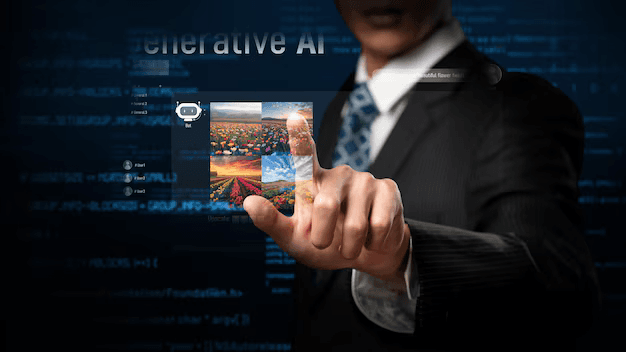
One of the most exciting advancements in AI-driven design is image generation technology.
AI image generation models can create entirely new visuals based on simple text prompts or design templates.
For example, a user may request an AI system to generate:
- Marketing graphics
- Social media illustrations
- Product visuals
- Abstract design elements
These systems analyze user instructions and generate images that match the desired concept.
This technology dramatically reduces the time required to produce original visual content.
Automated Design Workflows
Another significant benefit of AI tools is the automation of repetitive design tasks.
Designers often spend considerable time adjusting layouts, resizing images, and adapting graphics for multiple platforms.
AI-powered tools can automatically handle these adjustments.
For instance, a single design can be automatically adapted for:
- Instagram posts
- LinkedIn banners
- Twitter graphics
- Website visuals
By automating these workflows, businesses can maintain consistent branding while significantly reducing production time.
Personalization and Dynamic Visual Content
AI technology also enables dynamic personalization of visual content.
Modern marketing platforms increasingly rely on personalization to deliver relevant experiences to users.
AI-powered design tools can generate visuals tailored to specific audiences or campaigns.
For example, businesses can create multiple versions of a promotional graphic customized for different user segments.
This level of personalization helps brands communicate more effectively with diverse audiences.
Enhancing Creativity Through AI Collaboration
Some critics initially feared that AI tools might replace human creativity.
In reality, AI is proving to be a powerful creative assistant rather than a replacement.
Designers and marketers can use AI tools to explore new creative directions, generate ideas quickly, and experiment with different visual styles.
AI tools accelerate the creative process by handling repetitive tasks while allowing humans to focus on storytelling, strategy, and innovation.
This collaborative relationship between human creativity and AI technology is shaping the future of design.

AI in Marketing Campaigns
AI-generated visuals are becoming increasingly popular in digital marketing campaigns.
Businesses are using AI tools to create:
- Promotional banners
- Product launch graphics
- Social media advertisements
- Educational infographics
Because AI tools can produce visuals quickly, marketing teams can experiment with multiple campaign concepts and test which designs perform best.
This experimentation helps businesses optimize their campaigns and improve engagement rates.
Challenges and Ethical Considerations
While AI-powered visual content offers many advantages, it also raises important questions.
Organizations must consider issues such as:
- Copyright and ownership of generated images
- Ethical use of AI-generated content
- Transparency in automated content creation
Responsible use of AI technologies requires clear guidelines and thoughtful implementation.
Businesses must ensure that AI tools are used in ways that respect intellectual property and maintain authenticity.
The Future of AI-Powered Visual Content
AI-driven design technologies are evolving rapidly, and their capabilities will continue to expand in the coming years.
Some emerging developments include:
AI Video Generation
Future tools may generate short marketing videos automatically based on scripts or prompts.
Real-Time Content Creation
AI systems may generate visuals instantly based on real-time events or marketing campaigns.
Integrated Marketing Platforms
AI design tools will increasingly integrate with marketing automation systems, allowing businesses to create, schedule, and analyze campaigns within unified platforms.
These innovations will further simplify content creation and allow businesses to focus on strategic growth.
Conclusion
Artificial Intelligence is transforming how businesses create and manage visual content.
By automating design workflows, generating original images, and enabling personalized marketing visuals, AI-powered tools are making professional content creation more accessible than ever before.
For businesses seeking to maintain strong digital presence, adopting AI-powered visual content solutions can significantly improve efficiency and creative output.
As AI technology continues to advance, the future of visual content creation will be shaped by a powerful collaboration between human creativity and intelligent automation.