How Agile Development Helps Startups Build Better Products Faster
Agile development has transformed how modern software products are built. Instead of long development cycles, agile teams deliver incremental improvements through continuous collaboration and iteration. This article explores how agile practices help startups build better products faster.
Introduction
Building successful digital products requires more than just great ideas. It requires effective collaboration between designers, engineers, product managers, and business stakeholders.
Traditional software development approaches often relied on long planning phases followed by large releases. While this method worked in some contexts, it proved inefficient for startups operating in fast-changing markets.
Startups must move quickly, test assumptions, and respond to feedback in real time.
Agile development was created to support this type of rapid innovation.
By emphasizing flexibility, collaboration, and continuous improvement, agile methodologies allow teams to build better products while adapting to changing requirements.

What Is Agile Development?
Agile development is a software development philosophy that prioritizes iterative progress over rigid planning.
Instead of developing an entire product in a single release cycle, agile teams divide work into smaller units called sprints.
Each sprint typically lasts between one and four weeks and focuses on delivering specific features or improvements.
At the end of every sprint, teams review progress, gather feedback, and plan the next set of tasks.
This continuous cycle ensures that products evolve gradually while incorporating insights from users and stakeholders.
Key Principles of Agile
Agile development is guided by several core principles that shape how teams collaborate and deliver products.
One of the most important principles is customer collaboration. Agile teams prioritize user feedback throughout the development process, ensuring that features align with real-world needs.
Another principle is incremental delivery. Instead of waiting months to release new functionality, agile teams deliver smaller updates more frequently.
This approach allows teams to validate ideas early and avoid investing time in features that users may not need.
Agile also emphasizes cross-functional collaboration, encouraging developers, designers, and product managers to work closely together.
Agile Frameworks Used by Development Teams
Several frameworks have been developed to implement agile practices effectively.
Two of the most widely used frameworks are Scrum and Kanban.
Scrum
Scrum organizes development work into time-boxed sprints. Each sprint includes planning sessions, daily stand-up meetings, sprint reviews, and retrospectives.
These structured rituals help teams stay aligned and maintain consistent progress.
Kanban
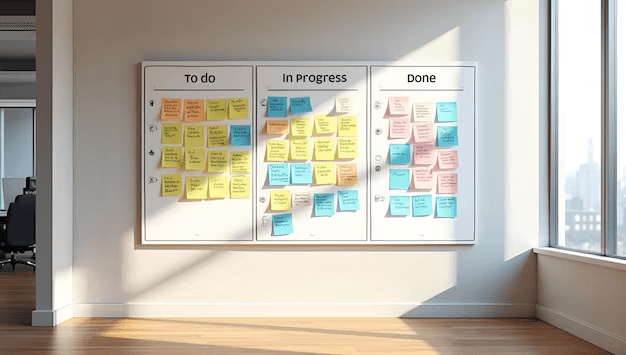
Kanban focuses on visualizing work through task boards. Tasks move across different stages such as "To Do," "In Progress," and "Completed."
This method provides teams with a clear overview of workflow and helps identify bottlenecks.
Many teams combine elements of both frameworks to create customized agile processes that suit their needs.
Benefits of Agile Development for Startups
Agile development offers several advantages for startups.
First, it enables faster product iterations. Teams can quickly release new features and respond to user feedback.
Second, agile improves collaboration between team members. Frequent communication ensures that everyone understands project goals and priorities.
Third, agile reduces risk. By delivering incremental updates, teams can detect potential issues early before they become costly problems.
Finally, agile helps startups stay adaptable. Markets evolve rapidly, and agile teams can adjust their roadmaps without disrupting development progress.

Continuous Improvement Through Feedback
One of the most valuable aspects of agile development is the ability to continuously improve processes.
After every sprint, teams conduct retrospective meetings to evaluate what worked well and what could be improved.
These reflections allow teams to refine workflows, eliminate inefficiencies, and strengthen collaboration.
Over time, this culture of continuous improvement leads to more productive teams and higher-quality products.
Agile Development in the Future
As technology continues to evolve, agile development practices are becoming even more important.
Modern software teams increasingly rely on tools that support agile workflows, such as:
- Version control systems
- Continuous integration pipelines
- Automated testing frameworks
- Collaborative design platforms
These tools enable distributed teams to collaborate effectively regardless of location.
With remote work and global development teams becoming more common, agile methodologies provide the flexibility needed to build successful products in dynamic environments.
Conclusion
Agile development has transformed the way modern products are built.
By focusing on collaboration, iteration, and continuous improvement, agile teams can deliver high-quality software while adapting to changing market demands.
For startups seeking to innovate quickly and build scalable digital products, agile development remains one of the most powerful approaches available.